
10-Year Housing and Homelessness Plan refresh - November update
We’re in the home stretch of the refresh of the 10-Year Housing and Homelessness Plan. The engagement period has ended and the Housing and Homelessness Leadership Table is working on finalizing the targets, key performance indicators and key results indicators that will guide the annual action plans for the coming years. From now until early March the draft Plan will make its way through the City review process before heading to Council for approval.
This has truly been a community effort and the HHLT is grateful for the deep commitment of time and expertise from across the housing and homelessness sectors. Thank you to everyone who joined us for the Housing and Homelessness Leadership Session last week.
The summary of feedback from the October 6 session is available here.
City of Ottawa Housing Dashboard Update
As part of the City’s commitment to transparency, accountability and decision-making based on data, the Social Policy, Research and Analytics (SPRA) team under Community Safety, Well-Being, Policy and Analytics (CSWBPA) has been working hard to enhance its data tools to better reflect the diverse needs of Ottawa communities.
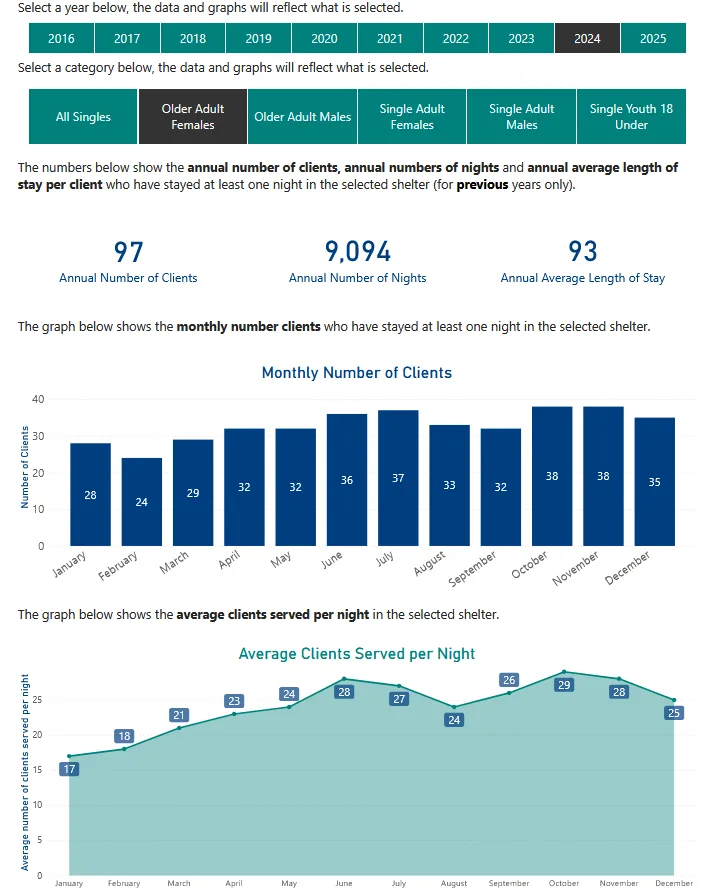
The SPRA team has developed two new audience filters – specifically for Newcomers and Older Adults – to be added to the existing Shelter system use and trends dashboard, and has launched the Housing supports dashboard.
The two new filters will enable more targeted analysis and responsive service planning, and the new, public-facing dashboard will provide greater transparency and better insight into the journeys of individuals and families through the shelter system based on key indicators such as:
- Newcomer data – singles, families, household counts and trends
- Number of older adults (65 years old+)
- The cost of hotels
- The cost of shelters by system types (single adults, family, youth)
- The number of singles and families who have transitioned from shelters to permanent housing, either through rent-geared-to-income housing or with the support of housing subsidies
Bumblebee Partnership Initiative Launch
The Bumblebee Partnership Initiative launched at an event on October 23, with a full room of housing and health care leaders coming together for this announcement.
Across Ottawa, the connection between housing and health has never been clearer. Every day, people face complex challenges, substance use, mental illness, and homelessness that cannot be solved in silos.
The BumbleBee Initiative is a new partnership model designed to change that. Developed collaboratively by Ottawa Community Housing (OCH), Options Housing, Ottawa Salus, and Gignul Non-Profit Housing Corporation, it brings housing sector leaders together from the outset. This new collaborative approach is designed to deliver more homes with wrap-around supports more efficiently, at a greater scale and in less time. The initiative is also designed to grow as additional partners join.
Ottawa currently faces long waits for supportive housing, with demand outpacing supply. Traditional approaches, where development and program funding are pursued separately, slow down delivery. The BumbleBee Initiative tackles these challenges head-on, creating a streamlined, scalable model that aligns funding, timelines, and expertise to deliver results faster.
“Collaboration and partnerships are in our DNA; they’re how we tackle the complex challenges people face every day,” said Stéphane Giguère, Chief Executive Officer of Ottawa Community Housing. “The BumbleBee Initiative creates a clear, coordinated path, allowing each partner to focus on what they do best: providing homes and the supports people need to thrive.”
The model is designed to be scalable and adaptable, with pre-developed templates for building design and service models that can be tailored to different sites and community needs. By running construction and program development concurrently, projects are delivered more quickly and efficiently than traditional approaches.
“BumbleBee shows what’s possible when housing and support providers work together from the start,” said Catharine Vandelinde, Executive Director of Options Housing. “It’s a practical, collaborative model that helps us deliver more supportive housing faster and more efficiently.”
“This partnership allows us to tackle the challenges of homelessness and housing instability from the start,” said Mark MacAulay, President and CEO of Ottawa Salus. “By embedding mental health care and substance use care directly into supportive housing, we address not just the symptoms but the root causes. This integrated approach builds stronger foundations for individuals to heal, recover, and achieve lasting independence.”
“The BumbleBee name reflects the spirit of this initiative: cross-pollination, collaboration, and shared purpose,” said Marc Maracle, Executive Director of Gignul Non-Profit Housing Corporation. “By bringing together diverse partners and perspectives, we’re creating an ecosystem that supports Indigenous housing and strengthens the entire community.”
This model embodies a principle that health and housing leaders have been calling for across the country: housing is healthcare. Stable housing improves people’s well-being and helps individuals build a foundation for the future.
Aligned with government priorities, the BumbleBee Initiative reflects a sector-wide shift from process-driven to results-driven collaboration. It aligns with:
- City of Ottawa Housing Innovation Task Force, Housing and Homelessness Leadership Table and 10-Year Housing and Homelessness Plan;
- Ontario’s Supportive Housing Best Practice Guide
- Government of Canada: Build Canada Homes, which prioritizes transitional and supportive housing and portfolio-based collaboration.
“BumbleBee is exactly the kind of innovation Ottawa needs. It brings housing and support providers together from the very beginning, aligning expertise, resources, and care to get people into homes faster. This is about more than building housing. It’s about giving people stability, support, and a real chance to thrive. That’s the impact we want for every resident, and it’s a model other cities can look to for inspiration,” said Mark Sutcliffe, Mayor of Ottawa.
BumbleBee’s first projects are currently in development, with partners exploring opportunities to expand the model across Ottawa, and to share lessons that can help scale supportive housing across the province.